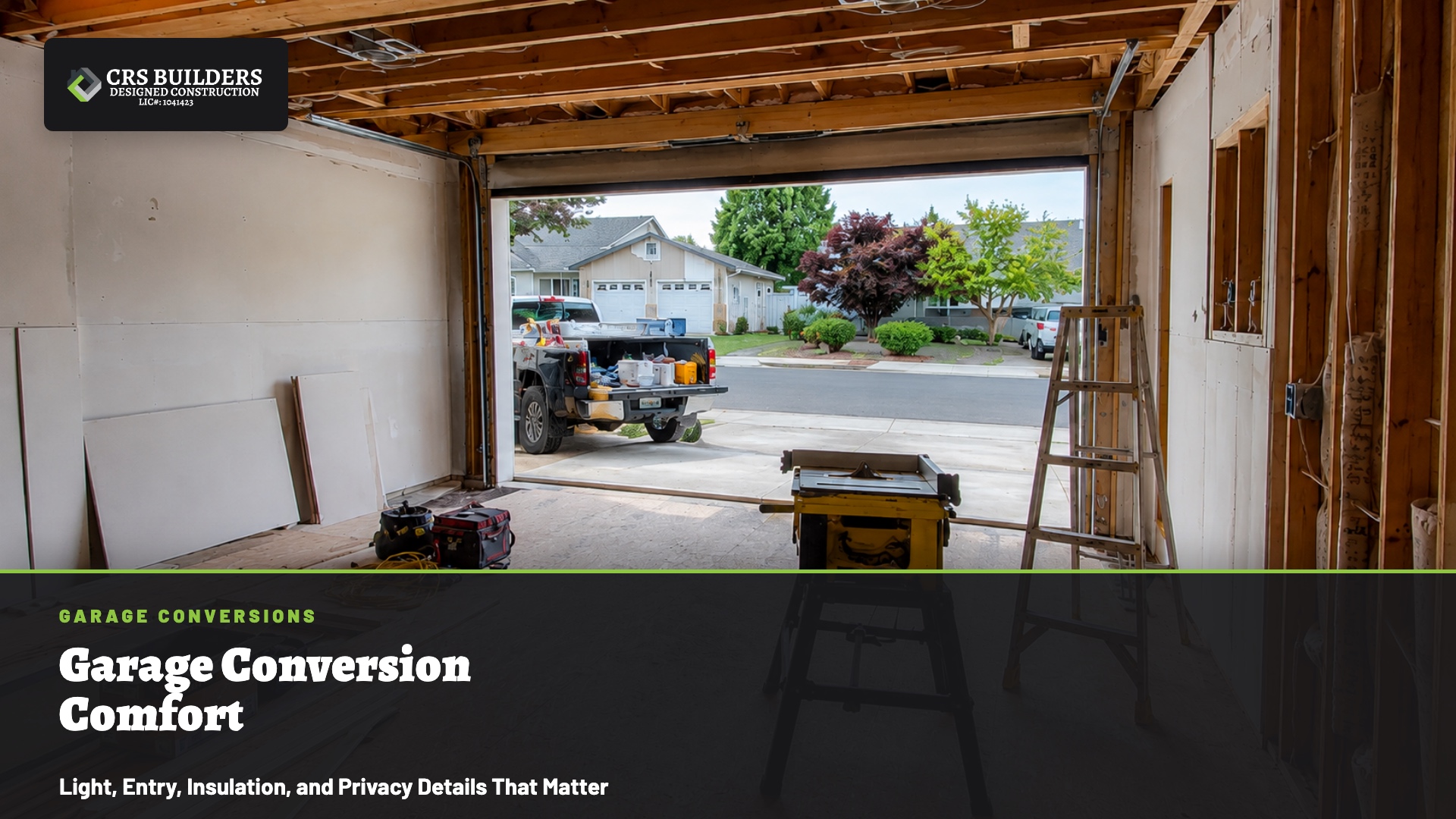
A garage conversion ADU should not feel like a garage that was simply finished. It should feel like a comfortable, intentional living space. That difference comes from design details most homeowners do not notice until they live in the space: light, entry, insulation, sound, privacy, and the way the former garage connects to the rest of the property.
For San Diego homeowners, these details can determine whether a garage conversion feels temporary or truly livable.
Natural Light Changes the Whole Space
Many garages start with limited natural light. Once the space becomes an ADU, window and door planning become essential.
Natural light helps a compact living area feel larger, warmer, and more comfortable. It also affects furniture layout, kitchen placement, and privacy. A window that looks good from the outside may not be the right window for the interior experience.
When planning a garage conversion, consider:
- Where morning and afternoon light enter
- Whether windows face private or public areas
- How window placement affects furniture
- Whether a new door can bring in more light
- How to avoid making the unit feel exposed
A well-lit garage conversion feels less like a converted utility space and more like a small home.
The Entry Should Feel Intentional
The entry is one of the biggest signals that a garage conversion is now living space. If the entry feels like a leftover driveway door, the unit can feel awkward. If it is designed with care, the ADU feels more complete.
A strong entry plan considers:
- How someone approaches the unit
- Whether the door location feels private
- Lighting and visibility
- A small landing or transition area
- Relationship to the driveway, side yard, or backyard
- How the entry looks from the street or main home
The entry does not need to be elaborate. It needs to feel deliberate.
Insulation and Air Sealing Are Comfort Issues
Garages are not typically built to the same comfort expectations as living areas. That means insulation, air sealing, and heating/cooling strategy need attention during conversion planning.
Comfort upgrades can affect:
- Summer heat
- Cooler evenings
- Street noise
- Interior quiet
- Energy performance
- How finished the space feels
A garage conversion may look complete in photos, but if it feels hot, cold, or noisy, the daily experience suffers. CRS Builders looks at the shell of the space as part of the design, not as an afterthought.
Privacy Needs to Be Designed In
Garage conversions often sit near driveways, sidewalks, alleys, or front areas of the property. That can make access convenient, but it also makes privacy more important.
Privacy planning may include:
- Window orientation
- Frosted or higher windows where appropriate
- Entry placement
- Landscape screening
- Outdoor lighting direction
- Separation from the main home’s private areas
Privacy is not about hiding the ADU. It is about making the space feel comfortable and independent.
Sound Matters More Than Expected
Sound is another comfort detail that homeowners sometimes overlook. A garage conversion may be close to the street, driveway, laundry area, or main home activity. The design should consider how sound travels into and out of the space.
Sound comfort can be affected by:
- Wall assemblies
- Door and window quality
- Insulation strategy
- Mechanical equipment placement
- Floor and ceiling conditions
- How close the unit is to active areas
A quiet ADU feels more like a home. That is especially important if the space will be used by family members, guests, or anyone with a different schedule than the main household.
The Garage Door Opening Is a Design Opportunity
The former garage door opening is often the largest design opportunity in the conversion. It can become a wall, window system, entry feature, or combination of elements.
This choice affects both the interior and exterior. From inside, it influences light and layout. From outside, it determines whether the conversion feels integrated with the home.
A thoughtful design can reduce the “former garage” feeling and create a more polished exterior.
Frequently Asked Questions
What makes a garage conversion comfortable?
Garage conversion comfort comes from natural light, insulation, air sealing, privacy, sound control, and an entry that feels intentional rather than leftover from the original garage.
Does a garage conversion ADU need more windows?
Many garage conversion ADUs benefit from revised or added windows, but the right window strategy depends on privacy, layout, exterior design, and available wall space.
Why does entry design matter in a garage conversion?
Entry design matters because it shapes the first impression and daily use of the ADU. A clear, private, well-lit entry helps the converted space feel like a real home.
Can CRS Builders help make a garage conversion feel less like a garage?
Yes. CRS Builders can help plan layout, light, comfort, exterior integration, and privacy so the finished space feels intentional and livable.
Is privacy harder with garage conversions?
Privacy can require more planning because garages often sit near driveways or street-facing areas. Window placement, entry orientation, and screening can all help.
Comfort Is What Makes the Conversion Work
A garage conversion is not successful just because it adds finished square footage. It succeeds when the space feels comfortable, private, bright, and connected to the property in the right way.
CRS Builders Inc. helps San Diego homeowners turn garage spaces into thoughtful ADUs designed for real daily use.
Call CRS Builders Inc. at 858-788-3839 or visit crsbuildersinc.com to discuss your garage conversion.